

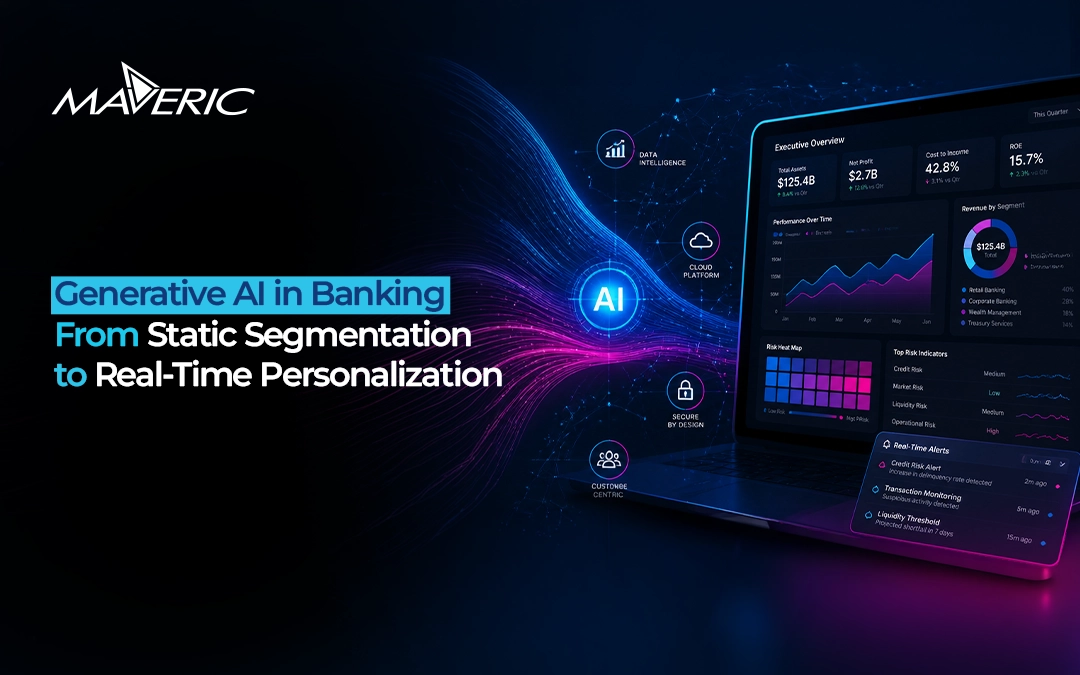
Generative AI in banking replaces static, human-built analytical models with a dynamic orchestration engine capable of real-time conceptualization, letting a bank identify and act on a customer opportunity the moment it emerges instead of waiting for the next scheduled campaign or model refresh. For CIOs and digital leaders at regional and community banks, this is one of the clearest places where generative AI produces measurable revenue impact, not just efficiency.
Why Personalization Has Failed to Deliver on Its Promise for a Decade
For years, the industry explanation for weak personalization results was data fragmentation: customer data scattered across siloed CRMs, core banking systems, and channel platforms. That’s a real hurdle, and untangling it is worth doing. But the deeper limitation was never just where the data lived. It was the industry’s reliance on human-built, static analytical models. Data scientists had to build a specific model for an anticipated outcome, load it with historical data, and run it as a batch process. The moment the context changed, the model broke, and building a replacement took another development cycle.
Generative AI removes that constraint by acting as a dynamic orchestration engine rather than a fixed, single-purpose model. Instead of pre-building a model for every scenario a marketing or relationship team can imagine, the system can conceptualize a response to a scenario as it emerges, using whatever combination of data is actually relevant at that moment.
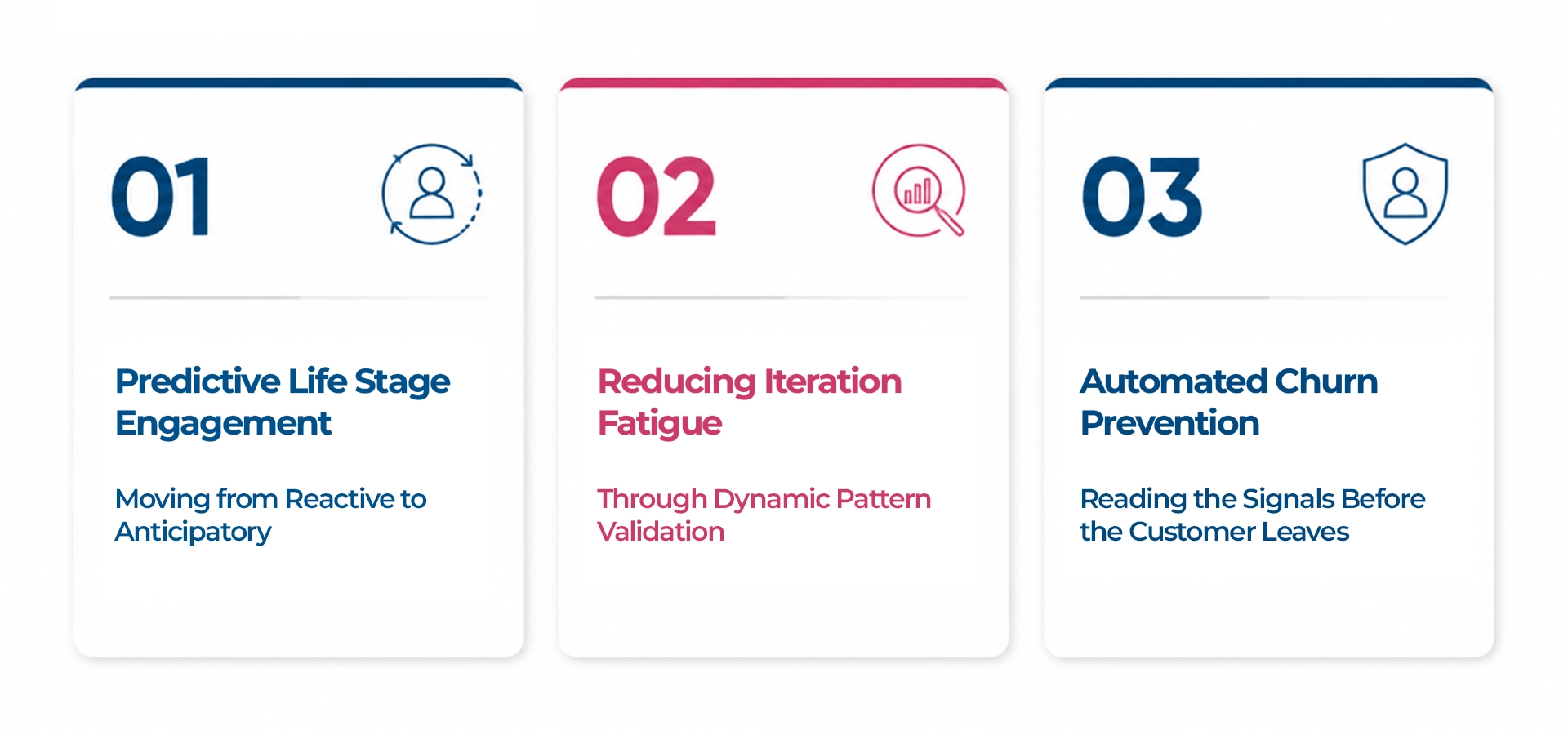
Predictive Life Stage Engagement: Moving from Reactive to Anticipatory
Traditional Next Best Action engines flagged product opportunities based on static demographics or a single recent transaction, which is why most cross-sell recommendations feel generic even when they’re technically personalized. Generative AI instead harnesses unlinked, plural data sets, such as stable salary deposits, changes in rental payments, geographic location signals, and browsing behavior, to make forward-looking, predictive inferences about a customer’s life stage.
Because the system doesn’t require pre-structured data tables to find these correlations, it can identify complex combinations across a customer base simultaneously rather than one segment at a time. That moves the bank from reactive cross-selling toward anticipatory engagement, identifying prime lending candidates before they’ve started actively searching for a loan.
Institutions achieving this level of AI adoption have reported gains in the range of 10 to 15% in revenue productivity, a meaningful number for any regional or community bank trying to grow share of wallet without proportionally growing marketing spend.
Reducing Iteration Fatigue Through Dynamic Pattern Validation
In the pre-AI era, marketing teams had to constantly A/B test campaigns, nudges, and alerts to figure out what worked, requiring endless manual iterations and coding adjustments for every new hypothesis. Generative AI eliminates much of that bottleneck by continuously creating patterns, testing them in real time, interpreting the results, and refining its own recommendations without waiting for a human to design and launch the next test cycle.
Because the system rapidly learns which specific messages and communication modes resonate with an individual customer, it drastically reduces what practitioners call iteration fatigue. Banks no longer need to send generic alerts to broad segments hoping for a conversion; a proactive nudge gets delivered close to the moment a customer is actually likely to act on it, which does as much for trust as it does for conversion rates
Automated Churn Prevention: Reading the Signals Before the Customer Leaves
Customer churn is typically preceded by subtle behavioral shifts, such as declining product usage, gradual balance reductions, or erratic digital engagement, that are individually easy to miss and collectively hard for a manual model to weigh in real time. Generative AI continuously analyzes this unstructured behavioral exhaust and, when it infers a high probability of churn, doesn’t simply flag the account for someone to review later. It orchestrates the intervention directly: low-risk candidates receive tailored, automated outreach, while high-value customers get routed immediately to a relationship manager equipped with an AI-generated brief on exactly what offers are likely to retain the business.
Why This Requires the Same Governance Discipline as Any Other AI Use Case
Personalization is often treated as lower-stakes than credit or fraud decisioning, which is a mistake. A generative model recommending financial products still touches fair-lending considerations, still needs bias monitoring across demographic groups, and still needs an audit trail if a recommendation is later challenged. Institutions that build personalization on the same fairness, explainability, and privacy principles they apply to lending decisions avoid rebuilding governance twice, once for the “important” use cases and once retroactively for personalization once it scales.
What This Means for the CIO and Digital Agenda
Generative AI in banking isn’t primarily a chatbot story. Its most measurable impact often shows up in personalization and customer engagement, where a dynamic orchestration engine can identify and act on an opportunity in real time instead of waiting for the next quarterly campaign cycle, and where the revenue upside is direct enough to build a clear business case around.
Get the full CIO mandate
From Digital-First to AI-First: The Mandate Reshaping the Banking CIO Agenda details how generative AI breaks the constraints of static personalization models, alongside the shift in customer servicing and software delivery that AI-first banking requires.
FAQ
1) How is generative AI different from the predictive models banks already use for personalization?
Traditional predictive models are static: built for a specific anticipated outcome and retrained on a schedule. Generative AI acts as a dynamic orchestration engine that can conceptualize a response to a new pattern in real time, without a human pre-building a model for every scenario in advance.
2) What data does generative AI use for predictive life stage engagement?
It can combine unlinked, plural data sets, such as salary deposit stability, changes in rental payments, geographic location signals, and browsing behavior, to infer a customer’s life stage and likely near-term financial needs, rather than relying on static demographic segments alone.
3) How does generative AI reduce “iteration fatigue” in marketing and personalization?
By continuously creating, testing, and refining patterns in real time instead of requiring manual A/B test design and coding for every new hypothesis. This lets a proactive nudge reach a customer close to the moment they’re actually likely to act on it.
4) Does personalization powered by generative AI need the same governance as lending or fraud AI?
Yes. Product recommendations touch fair-lending considerations and require bias monitoring and an audit trail like any other customer-facing AI decision. Institutions that apply the same governance principles across all AI use cases avoid having to retrofit governance into personalization once it scales.
5) What kind of ROI can generative AI-driven personalization deliver for a regional bank?
Institutions achieving enterprise-scale adoption of this kind of personalization have reported revenue productivity gains in the range of 10 to 15%, driven by more anticipatory cross-sell timing and reduced churn among at-risk customers.