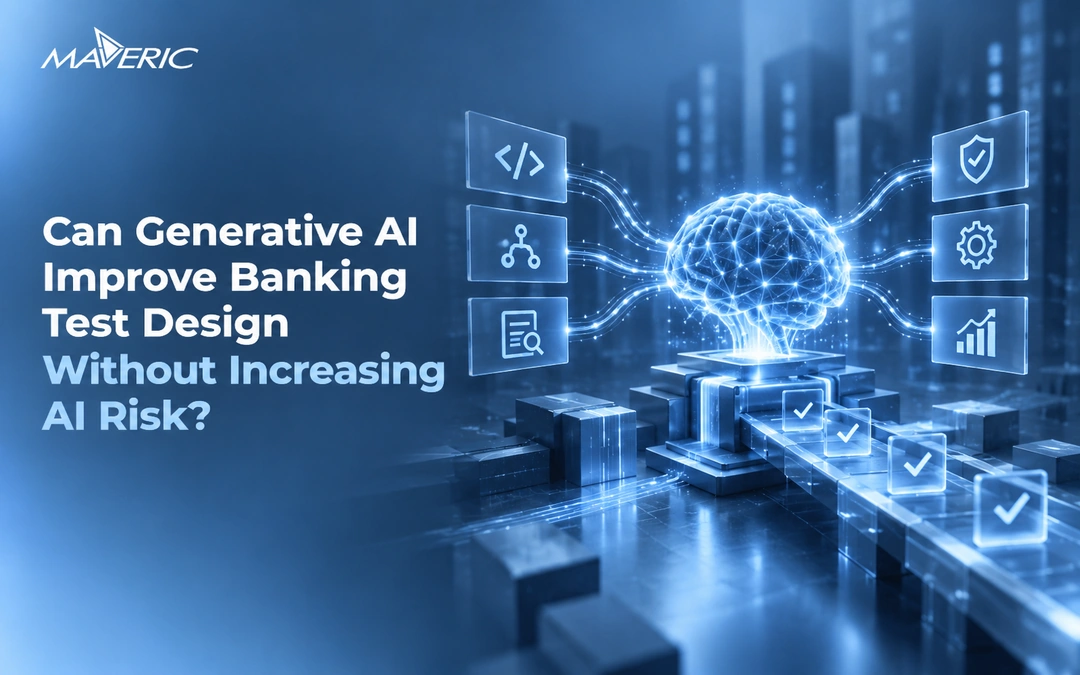

Generative AI can turn a user story into test ideas in seconds. For a bank, speed is only the first test of value. The harder questions are whether the generated scenarios reflect the bank’s products and controls, whether important edge cases are missing, whether... View
For many regional banks, the barrier to better quality engineering is not a lack of ambition. It is the assumption that meaningful change requires another multiyear replacement program. Most institutions already have a test management platform, automation frameworks,... View
Regression testing in banking often presents an uncomfortable tradeoff. Run the full suite and feedback may arrive too late. Run a reduced suite and teams may worry that the wrong scenario was excluded. The root problem is not always execution capacity. It is weak... View
Release velocity is visible. Release confidence is harder to measure. A bank can reduce build time, automate deployment, and execute thousands of tests, yet still hesitate at the final release decision. The remaining uncertainty often concerns what the metrics do not... View
Many banks have spent years expanding test automation. Yet release decisions can still involve lengthy reviews, oversized regression packs, manual impact analysis, and calls to the same subject matter experts. That is not evidence that automation failed. It is... View
Regional banks are not behind on AI in software delivery. They are ahead. The real question is whether test automation moved with them. Most bank technology leaders have this backwards. The assumption, understandably, is that regional banks and credit unions are playing catch-up on AI, that megabanks with larger technology budgets are further along. The […]
Development moved faster this year. Most quality engineering functions did not move with it. Here is how to tell if yours is one of them. Ask most CIOs, CTOs, and Heads of Engineering at regional and challenger banks whether their development teams got faster this year, and the answer comes quickly: yes, obviously. Ask the […]
Banks increasingly consume AI through vendor APIs, SaaS platforms, cloud services, and embedded features. Proprietary architecture can limit visibility, but it does not transfer accountability. SR 26-2 states that model risk principles remain applicable to vendor products and calls for institution-specific understanding, validation, monitoring, and outcome analysis. A vendor model card is an input to […]