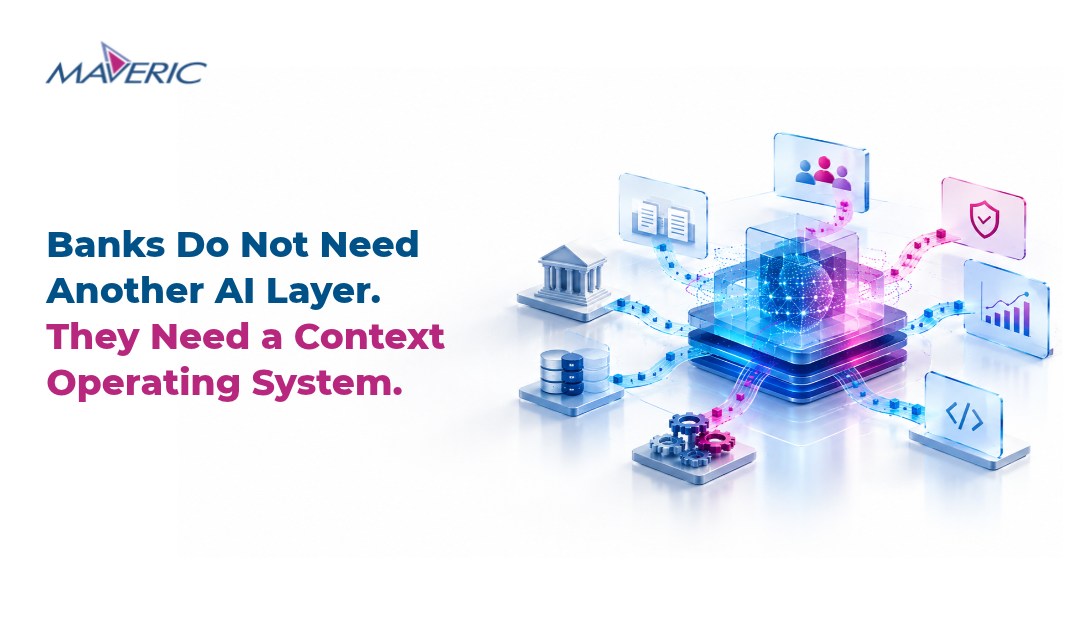
As banks introduce copilots and AI agents across software delivery, a familiar architectural instinct is emerging: create a context layer. The problem is that a layer sounds passive. It suggests a place from which information is fetched. Agentic delivery requires something more active.
Context has to be captured as the bank changes, assembled differently for each task, governed according to risk, carried across human and agent hand-offs, and updated from production outcomes. That is why the whitepaper argues for a banking-specific context operating system rather than another repository or retrieval layer.
The Context Operating System Has to Connect the Existing Bank
The first principle is integration. Context should meet agents inside the systems where delivery already happens: product backlogs, document stores, architecture repositories, source control, CI/CD, test platforms, observability tools and policy systems. Requiring teams to duplicate knowledge into a new repository simply creates another source that can become stale.
The operating system instead needs a structured knowledge model that connects business outcomes, domain rules, decisions, services, APIs, data, controls, tests and incidents. Semantic retrieval then allows agents to find information by meaning while still respecting authority, recency, sensitivity and user permissions.
Every Agent Needs a Different Context Package
A central repository alone does not solve the problem because different stages require different information. The operating model has to assemble a bounded context package at execution time: relevant enough to support the task, but stripped of redundant, restricted or stale information.
This is where context engineering differs from simply increasing a model’s context window. The goal is not maximum volume. It is current, authorized and high-signal information. The system also needs memory outside the temporary model window so that decisions, exceptions and production learning survive across longer-running journeys.
Governance Must Travel With Agent Action
The operating system also governs what agents may access, infer and execute. Risk classification, approval thresholds, provenance, audit logs, exception handling and least-privilege access become runtime capabilities rather than policies that sit beside the toolchain.
That supports configurable quality gates. A lower-risk change can move faster, while a consequential banking change can require stronger evidence, testing and human review. Versioning and provenance record the source, owner and transformation history of context and generated artefacts, allowing the bank to reconstruct not only what changed but what information shaped the change.
Production Has to Become Part of the Context Loop
Traditional delivery models often treat production as the end of the lifecycle. In an AI-powered SDLC, production is one of the richest sources of new context. Incidents, customer outcomes, overrides, performance behavior and control findings should feed back into requirements, knowledge and regression tests.
This changes what the bank measures. Lines of code generated or agent activity are weak indicators of value. The whitepaper recommends measures such as retrieval precision, stale-context rate, unsupported claims, traceability coverage, policy violations, human override, rework, escaped defects and change-failure rate. The unit of success is a safe production outcome connected to business value.
Start With One Material Value Stream
The adoption path does not need to begin as an enterprise platform program. The whitepaper recommends choosing one bounded banking journey with meaningful change volume, visible hand-offs and measurable outcomes, such as card-limit management, customer onboarding or payment exception handling.
From there, the bank can map how context moves from demand through production, assign authoritative owners, introduce context contracts at high-friction hand-offs, connect existing systems of record, engineer task-specific retrieval, apply progressive autonomy and measure flow and trust against a baseline. Production outcomes then close the loop, and the operating pattern can be reused across other value streams without erasing domain-specific rules or risk boundaries.
Context Becomes the Control Plane for AI-Native Delivery
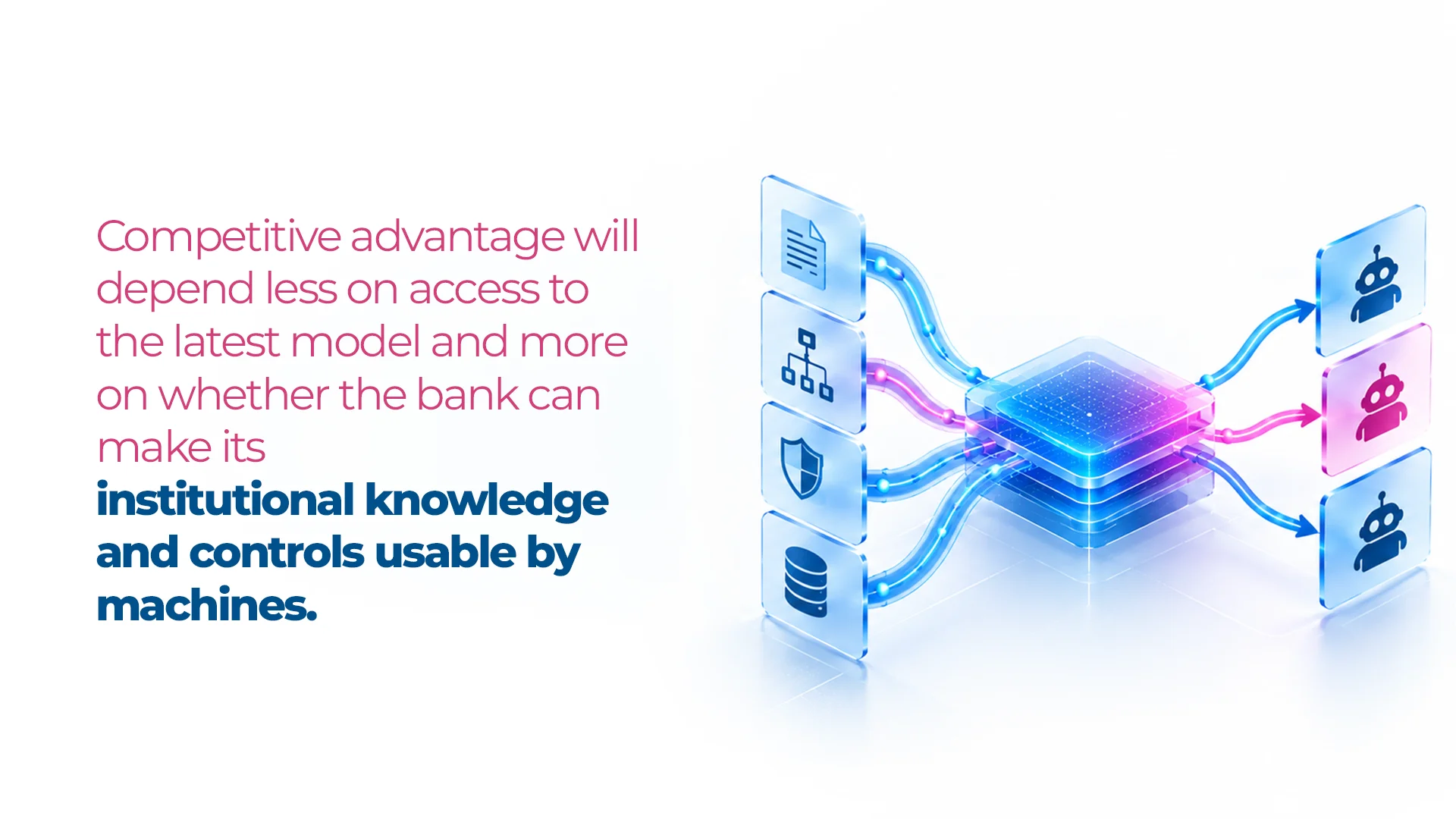
The strategic implication is significant. AI will keep improving at individual SDLC tasks. Competitive advantage will depend less on access to the latest model and more on whether the bank can make its institutional knowledge and controls usable by machines.
Maveric built Context.OSAI around this discipline, connecting orchestration, closed-loop feedback, a contextual knowledge graph, agentic automation and safe-AI-by-design into an operating layer for the AI-powered SDLC. The objective is not more AI activity. It is a delivery system in which context, trust and learning persist from intent to production.
Go Deeper: Build the Context Continuum
Maveric’s whitepaper, The Context Continuum: Engineering Trust Across the AI-Powered SDLC, sets out the ten operating capabilities and five fabrics required to put context engineering into practice, together with a pragmatic action plan for beginning with one value stream and scaling by pattern. Explore the architecture and operating model for building a governed context continuum across the AI-powered banking SDLC.
FAQ
1. What is a context operating system?
A context operating system continuously captures enterprise knowledge, assembles task-specific context, governs agent action, preserves provenance and learns from production outcomes across the AI-powered SDLC.
2. How should a bank start context engineering?
Start with one bounded, material banking journey, map the context chain, assign authoritative owners, introduce context contracts at high-friction hand-offs and measure flow and trust against a baseline.
3. What should banks measure in an AI-powered SDLC?
Useful measures include context freshness, retrieval quality, traceability, policy compliance, human overrides, rework, escaped defects, delivery stability and safe production outcomes rather than simply agent activity or code generated.