The Situation
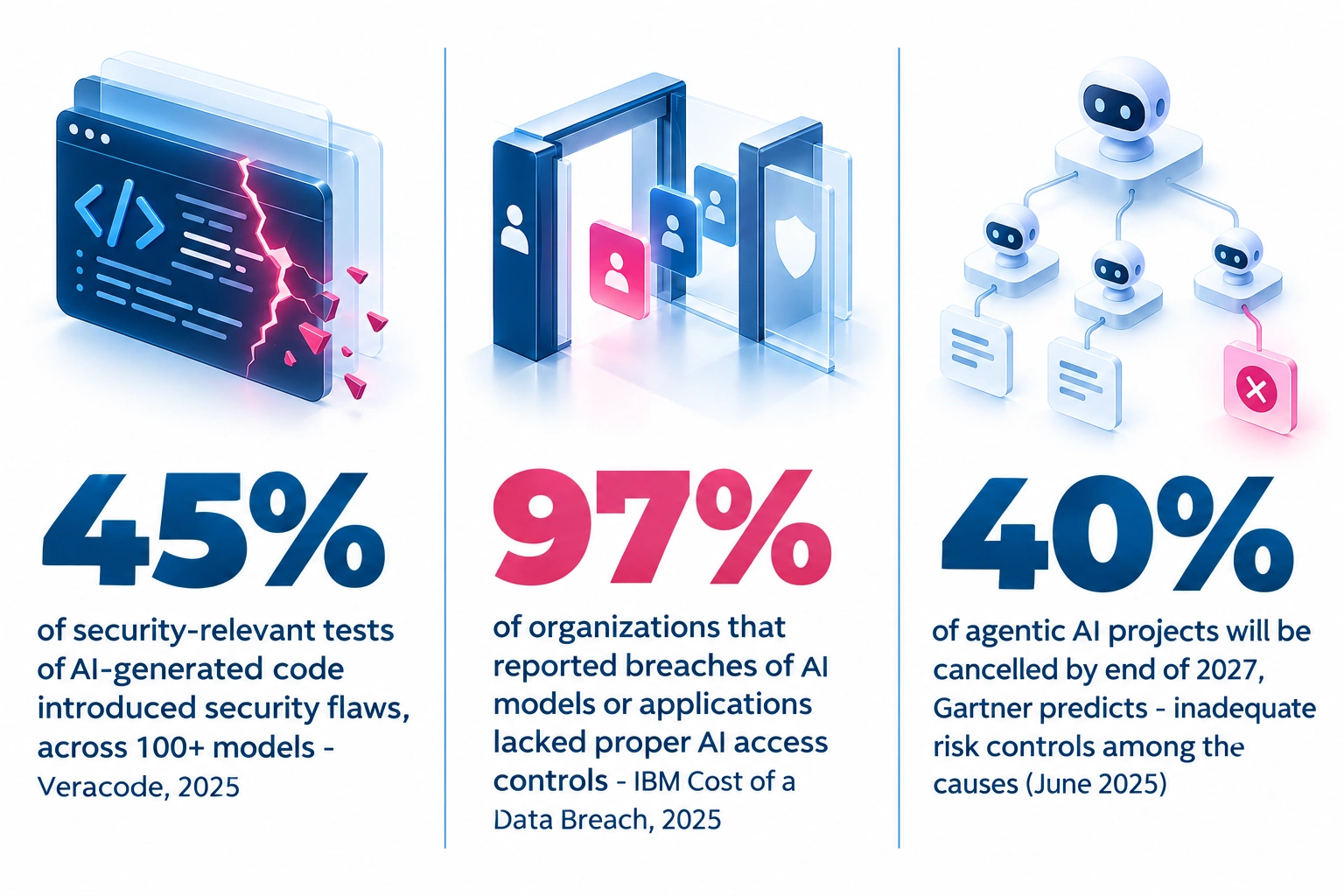
AI is already inside your delivery pipeline. Developers use coding assistants; agents are starting to draft requirements, generate tests and propose releases. The question your board, your auditors and your examiners will ask is not whether you use AI in delivery. It is whether you can show how every AI-assisted change was made, against which rules, and who approved it.
Most institutions can’t yet – because the context behind each decision is scattered across tickets, documents and people, and AI agents act on whatever fragment they are given.
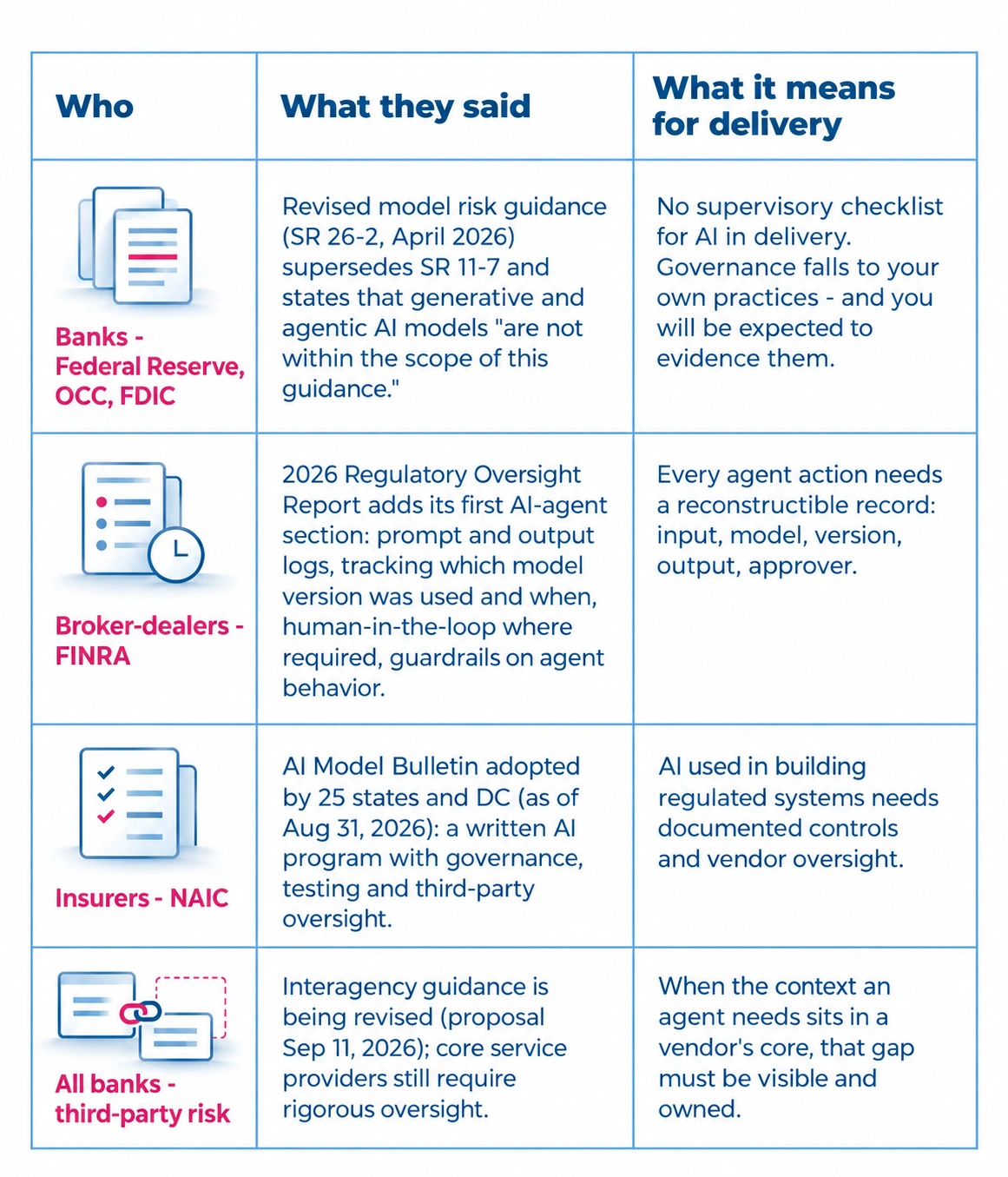
What us supervisors have already said
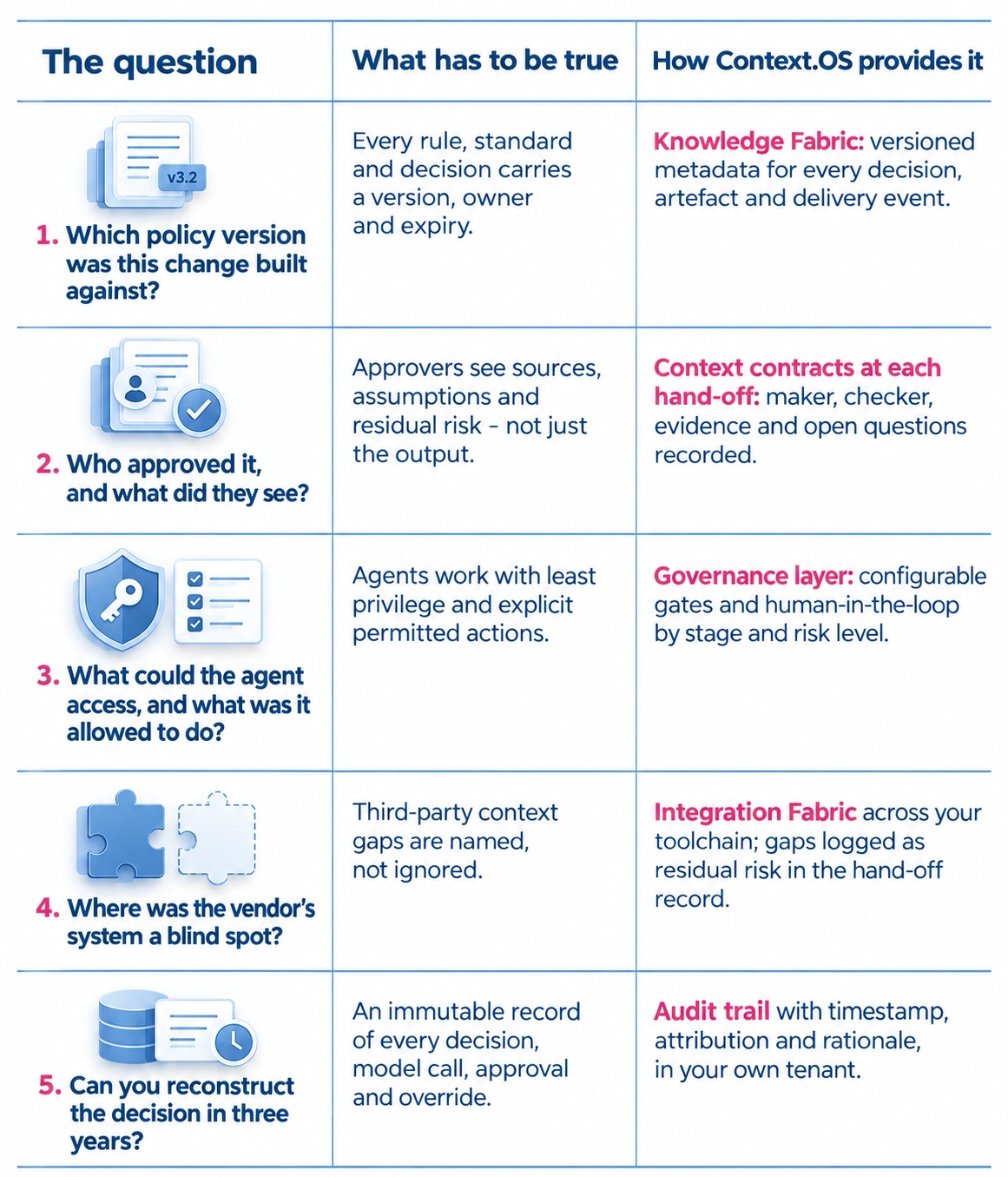
Five questions to test your readiness
If an examiner or your audit committee asked these about an AI-assisted change shipped last month, could you answer in an afternoon?
The business case
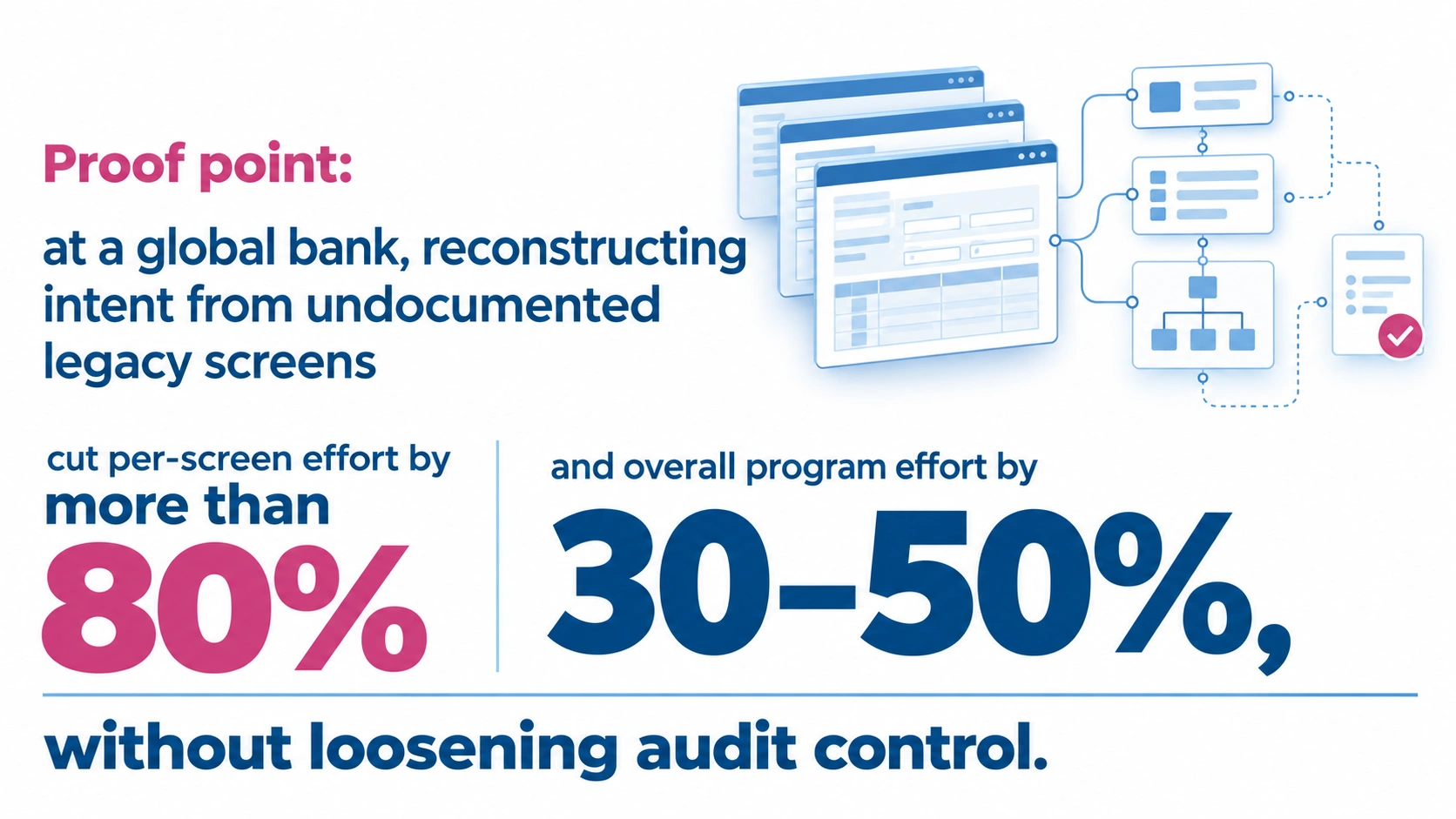
Governance is the entry point, not the whole return. The same context that makes a change defensible also makes delivery faster and steadier: less rework from missing rules, shorter reviews because reviewers see provenance, and fewer escaped defects. Google DORA’s 2025 research found AI “amplifies what’s already there” – and recommends connecting AI to internal context.
We baseline these with you before any pilot: lead time, change-failure rate, rework, escaped defects, review effort and audit-evidence preparation time.
How institutions start
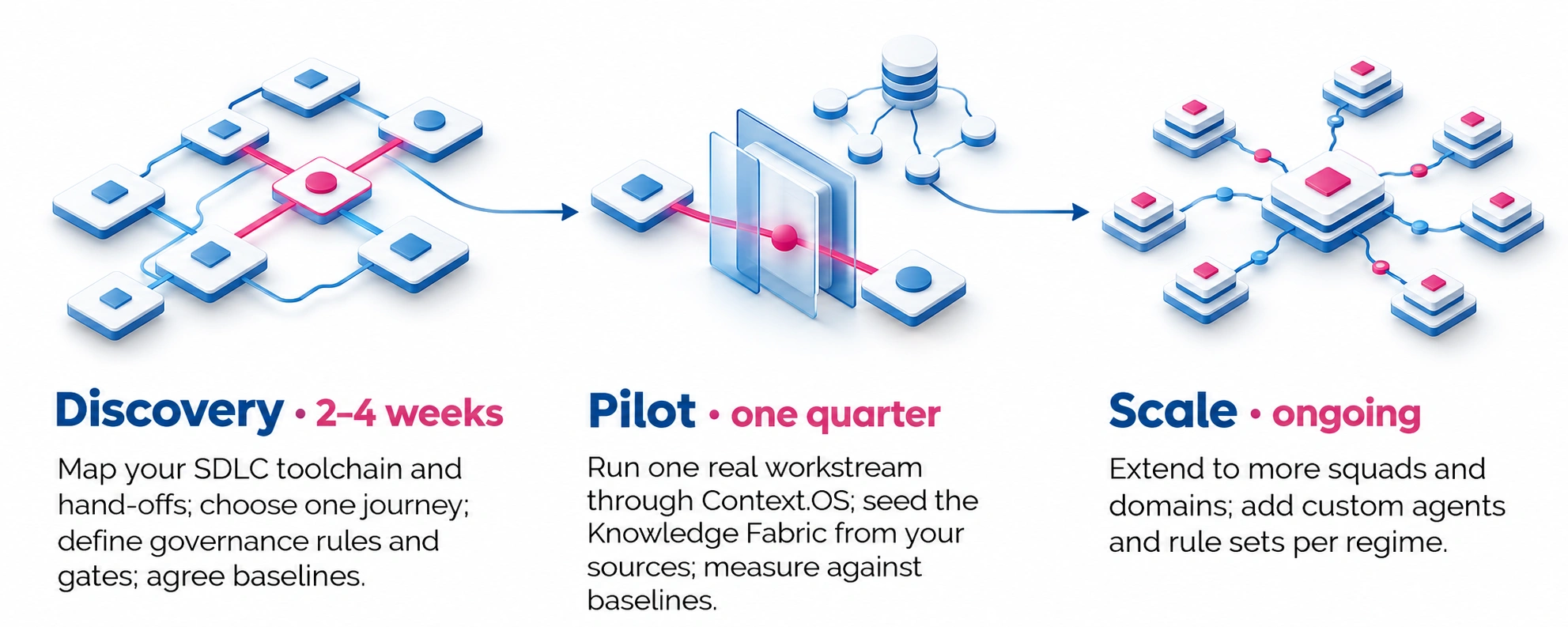
Model-agnostic. Deployed in your Azure, AWS or on-premises tenant. Integrates with Jira, ADO, Git, ITSM and monitoring – no rip-and-replace.
See a governed hand-off run, live.
In 45 minutes we run one delivery scenario end to end – and show the full audit trail behind it. No slides. Bring a risk or audit colleague. Book A Demo
From five questions to an operating model
The Context Continuum sets out how to build the evidence an examiner or audit committee may ask for into delivery itself: provenance and versioning on every rule, a maker and checker at every hand-off, and a 10-step plan that starts with one journey.
Read the whitepaper